A Whole Chicken for Your Nest Egg (Part 1)

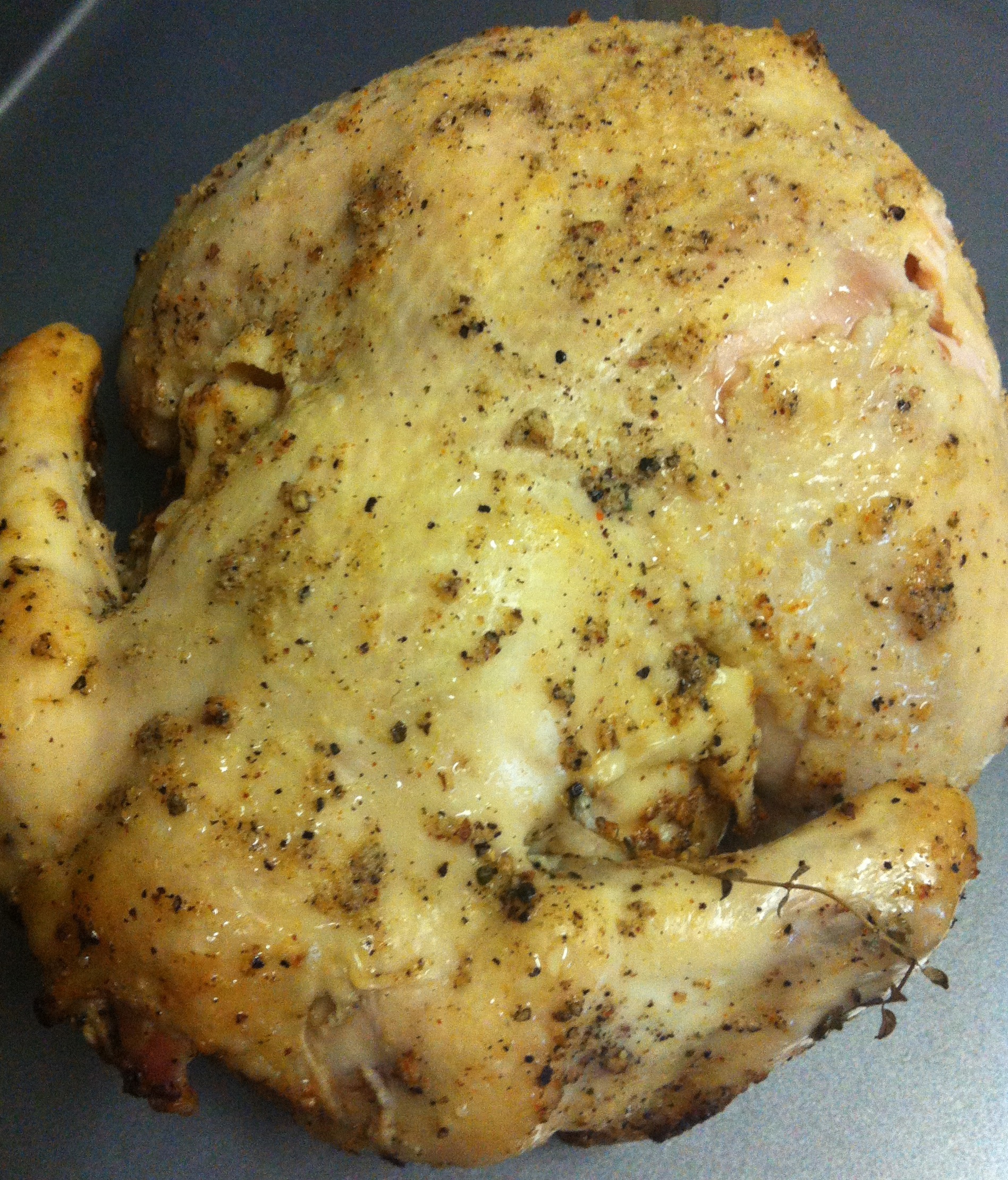
Whole Cooked Chicken

Looking for a way to save a little money each week?  Did you know that you can buy a whole chicken at the grocery store for almost half the price per pound that you can buy boneless, skinless chicken breasts?  Since we eat chicken more than any other meat in our home, this is a great deal for our budget.  Plus, you can get WAY more nutrients & meals out of a whole chicken with the skin and bones still attached.  More for less?  I don’t see a downside here…

As I’ve mentioned before, slow-cooking meat on the bone is a tradition for a reason. You need only taste some delicious BBQ ribs that have been on the smoker for 10+ hours or the juicy Thanksgiving turkey that Grandma has been basting all day.  So, why is it that meat tastes better when cooked this way?  Nutrients take time and moisture to be released.  When you overcook meat, it becomes tough because the fat, protein and sugar within the meat get fused during the heating process and destroy the nutrients, causing reactions between them that form carcinogens. You can avoid this by making sure your meat stays moisturized during cooking (basting, slow cooking, stews, pressure cooking).  The water molecules tenderize the tough proteins and keep them from fusing together. They also work at the connective tissue in the cartilage, skin, bone and ligaments to release molecules that help our joints and minerals like calcium, potassium, iron, etc.  The great taste comes from the itty bitty peptides that are formed as water molecules chop the proteins small enough to fit our taste buds.  Need one more reason to keep the skin on? The fat sits right underneath the skin in birds – fat gives us energy, helps our cells rebuild and allows us to absorb fat-soluble vitamins like A, D, E and K. This natural, healthy fat is different than sugar in that it doesn’t cause an insulin release (hello weight gain). However, it’s important that you buy organic meat; because pesticides on the plants animals eat accumulate in their fat, you need to buy organic to avoid these chemicals (and much more).

Each week, I buy a whole, organic chicken (remove and save giblets).  I usually season with salt and pepper and some fresh herbs, but you can find recipes online for adding other ingredients for different flavors.

Seasoned raw chicken in crockpot

I put it in my crockpot on low for around 4 hours (it depends on your crockpot temp so basically until meat thermometer reaches 165 degrees).  After letting it cool a bit, I take the meat off the bones. You can find YouTube videos showing you how if you’ve never done it before – I promise it’s easy and not as gross as it seems. And just look at how much meat I have for the week:
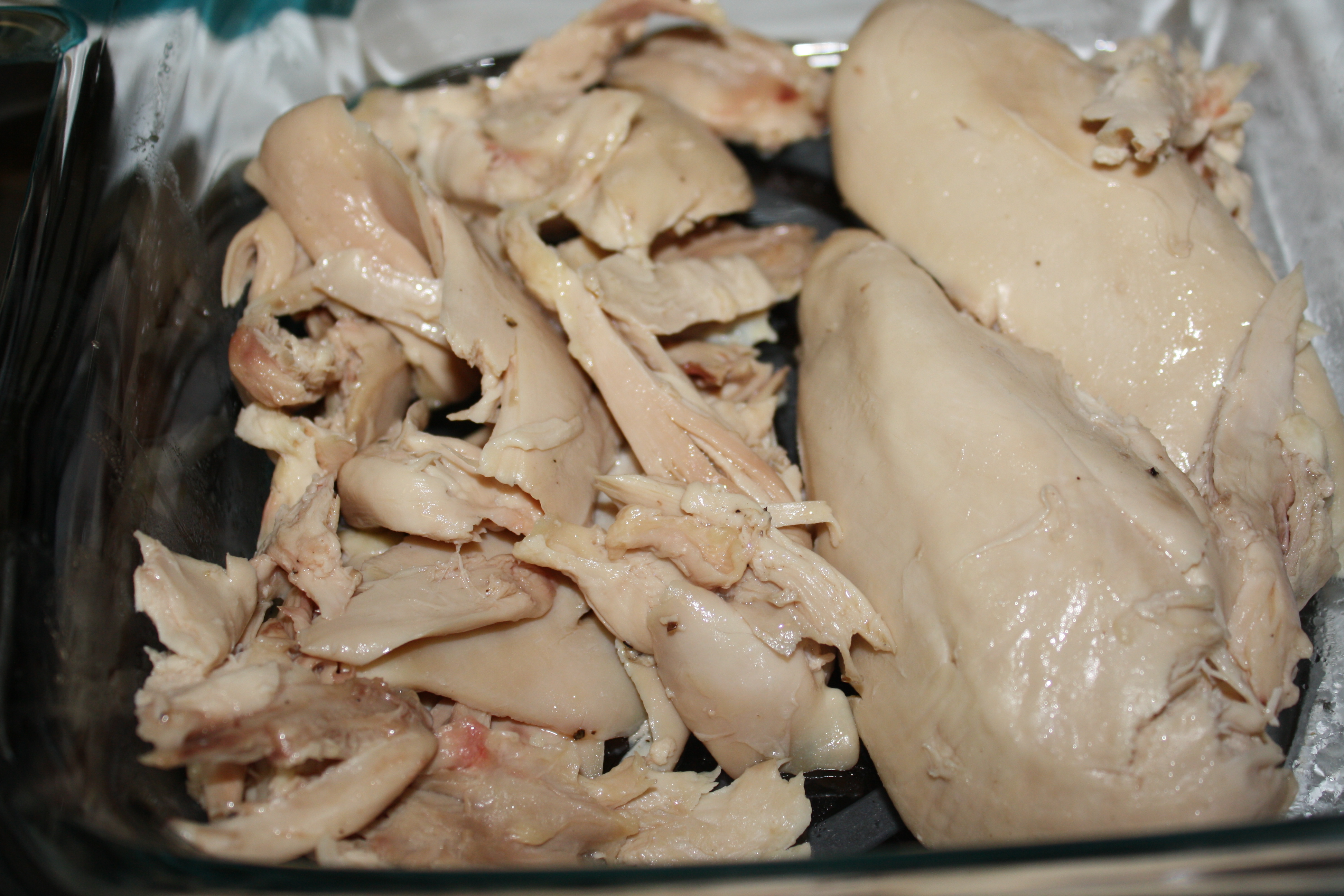
Cooked Chicken

Now, I always have this ready to go for quick meals – add some fresh veggies, put it in a salad or add to a soup. The actual hands-on time is only 5 minutes to start and then 10 to take the meat off the bones. I save the bones and put them right back in the crockpot.  In part two, I’ll explain how the bones give us even more nutrients and help create a staple of culinary technique.

Note: If you typically don’t like dark meat (like my hubby), try using those pieces in soups or other dishes, instead of by themselves.  I’ll admit I always hated dark meat until I started using organic meat – it doesn’t seem to have the same type of fatty texture that’s always disgusted me in the past.  Try it and see what you think!

Source: I simplified the scientific process of hydrolytic cleavage, or hydrolysis.  You can learn more about it online or from Deep Nutrition.

It’s That Time of Year…

Cold and flu season. Up until a couple of years ago, I generally spent December – March being sick all the time.  No matter how many times I washed my hands or tried to stay away from people, I always caught something.  And when I got a cold, it would be weeks, if not months before I got over it; plus, it usually developed into bronchitis or a sinus infection, and even pneumonia once, at some point too.

Well, I joined the club and caught a cold over the weekend.  But, I’m already much better.  Coincidence?  I think not!  Eating healthy gives you the nutrients your body needs to keep your immune system in good shape so that it can do it’s job.  I focus on a few key items in my diet, especially when I’m sick, to aid the healing process:

  • Kombucha tea – contains lots of probiotics that fight off the bad bacteria attacking your system
  • Bone broth – soups with broth made from chicken/beef bones and full of veggies pack lots of nutrients (I’ll be sharing an easy recipe later this week!)
  • Water – drink lots of it… not only does it help move toxins through your body, but it moisturizes mucous and helps move it through the sinuses

I also want to share a few great articles to expand upon some of the supplements I take daily (and more of when I’m sick) as well as a few other natural ways to help prevent or fight off a cold or the flu fast:

Supplements cannot replace a good diet, but since many of our foods are now lacking the nutrients they had just a hundred years ago, they can definitely help boost your system. When buying supplements, make sure you look for those made from whole foods.  Taking fake vitamins that are manufactured from chemicals won’t help… you need real vitamins from real foods.  I find the best selection at People’s Pharmacy and Natural Grocer here in Austin.

Stay healthy!

– Christine

Why I’m Not A Vegan

If God wanted us all to be vegetarians...

In my search for the truth in health, one of the main controversies I’ve encountered has to do with whether meat and animal products are healthy for us.  I’ve seen Forks Over Knives and I think it’s a great documentary, with thought-provoking research and many convincing points – I absolutely recommend it.  For those of you who haven’t seen it, it examines the claim that most, if not all, degenerative diseases could be prevented and may be even cured by switching from our current animal-based, processed foods diet to a whole-foods, plant based diet. I agree with almost everything in the film, especially the healing abilities of proper nutrition, but I’ve had a few hesitations. History tells us that for thousands of years, humans hunted animals for food, which enabled them to survive, thrive and populate the earth with healthy children. Not only have humans hunted for generations, but they have developed ways to cook animals in a way to extract every possible bit of nutrition from them. Our ancestors fully understood the nutritional benefits as it helped them grow strong and protected them from disease. I don’t believe that we just happen to like the way meat and dairy taste, but that it tastes good for a reason.

When I wrote about my inspiration, I mentioned that the basic theory for healthy eating centered around authentic world cuisine.  When I say world cuisine, I’m not talking about the Italian fettuccine alfredo or Chinese sweet and sour chicken you might get at a restaurant today; I’m talking about the traditional, homemade & homegrown food from nations all over the world.  And when I say traditional, I’m not referring to Grandma’s fried chicken or chocolate chip cookie recipes made with Crisco; we’ve got to go back a few hundred years before scientists started creating fake foods that saved cooking time and money.  Many of the traditional ingredients and methods of cooking happen to be the ones you find in common across the world and across history, as they were the most successful for maintaining and improving health. Today, the best example of cuisine that has remained mostly unchanged in modern times is French.  The reason? They’ve always been kind of, well, arrogant, so their ingredients and techniques have remained the same for ages and continue to be studied by chefs in culinary school today.  When I think of French cuisine, I think of many foods in the Four Pillars: slow-cooked meat, rich broths, and healthy fats; I wonder if it’s a coincidence that they have much lower risks of heart disease and are known for being thin rather than obese, quite opposite of two of the worst epidemics we suffer from in America today.

All that said, let’s get to the point: why I’m not a vegan.  First of all, I fully understand and respect that some people have strong beliefs in protecting the rights of animals and don’t eat them for those reasons. In fact, I too have a serious issues with how most animals are farmed today, in unbelievably cruel and unsanitary conditions, as well as the fact that they are given unnatural hormones and harmful antibiotics. I could rant for hours on the topic (and recommend lots of documentaries if you’d like to see it for yourself), but, basically, that’s the reason I have chosen to only buy organic, hormone and antibiotic-free, pastured/free range (plus raw and local, when possible) animal meat and products. I also agree with the problems of environmental effects that modern farming due to an animal-based diet has created, but I also think the same can be said for produce farming – we are destroying the nutrients in our soil and plants with pesticides, toxins and genetically modified seeds.

Veganism and vegetarianism are not certainly not bad, and I absolutely believe that you can live a life full of nutrition and enjoy many benefits to your health. These diets rightly put the focus on whole foods and plants, instead of depending on meat and dairy for nutrition.  However, I want to make a case that there are health benefits of animal meats and products, when they are from good sources and cooked properly, as well as point out a few differences I’ve found between a vegan diet and an authentic world cuisine diet:
1. Animal meat cooked on the bones and broth made from animal bones provide essential nutrients, mainly collagen, to our joints, ligaments, tendons, arteries, skin, and hair.
2. Animal organs are extremely rich in vitamins, often more than can be supplemented with fruits or vegetables.
3. The anti-cholesterol and low-fat campaigns are myths.  We need healthy fat in our diets, and nature (not science) makes the best, including butter, eggs, and bacon.
4. We’re born dependent upon milk and it should remain an important part of our diet, as long as it’s organic and raw (or fermented like yogurt and cheese). Pasteurization and homogenization destroy the probiotics and fat molecules that help us maintain strong digestive tracks, immune systems, brain function and bones.
5. Wheat (unless it’s sprouted) becomes a staple for many vegans, who turn to bread and pasta as fillers, and, even if it’s “whole wheat” or “multi-grain,” it’s not quite as healthy or natural as it’s advertised to be.
6. Lastly, while definitely not true of all vegans, the lifestyle often necessitates the use of many processed, manufactured foods to supplement meals for those that don’t know how to cook or have trouble incorporating all the necessary nutrients to a vegan diet. These processed foods contain many harmful ingredients, mainly soy, vegetable/canola oils, and sugar.

I’ll be expanding on these points in future posts. I’m so excited to share what I’ve discovered in the coming weeks and hope this has peaked your interest a bit.  If you want to keep up with future posts, you can subscribe to my blog on the sidebar to the right to get an email whenever I post something new.  And, I’d love to know, which of the topics above are you most interested in learning more about?

– Christine

Parmesan Pesto Chicken with Herb-Stuffed Brussel Sprouts

Pesto Chicken and Brussel Sprouts

Trying to recover from all the cookies and carbs you devoured over the holidays but still craving the rich flavors?  Here’s a new recipe I created for you to try this weekend that is loaded with tastiness and nutrients.  Seriously, I could not stop saying “mmm!” the entire time I was eating this (and then again when I ate the leftovers), just ask my husband.  Hope you enjoy as much as I did!

Pesto Chicken Thighs

One of the “Four Pillars of Authentic Cuisine” I discussed in yesterday’s post was cooking meat on the bone.  Here’s a great way to put this pillar on your menu.  You’ll need:

  • 10 organic, pasture raised chicken thighs (bone-in with skin)
  • 1/2 cup of pesto (see recipe below)
  • 3 tablespoons freshly grated organic Parmesan cheese
  • juice from 1-2 organic lemon(s)
  • extra-virgin olive oil
  • salt and pepper (around 1 tablespoon of each)

To make a batch of pesto, combine 2 cups fresh, washed basil leaves with two cloves of garlic, 1/4 cup of pine nuts or raw almonds, 1/3 cup extra-virgin olive oil and salt and pepper in a food processor and chop until a smooth paste.  Then put in an airtight container and store in the freezer.  I store it in small 1/2 cup containers and just take it out to thaw whenever I need it for a recipe.

For the chicken, first rinse the chicken thighs and put them skin up into a 9×13 glass baking dish (line with foil or spread a thin layer of coconut oil on the bottom for easy clean up).  Next, massage the chicken to separate the skin from the meat and create a little pouch for your pesto mix. Stir the Parmesan cheese into your pesto and then distribute among the chicken thighs, stuffing the mixture into the pouches.  Then, sprinkle your lemon juice over the chicken thighs, along with the olive oil and salt and pepper. Rub all that goodness into the skin a little.  Put into a 375 degree oven for 35-40 minutes, or until browned on the top.  I usually check a little on the early side (because overcooked chicken not only tastes dry but also loses its nutrients) and use a meat thermometer to determine if it’s ready – chicken is perfectly and fully cooked at 165 degrees.

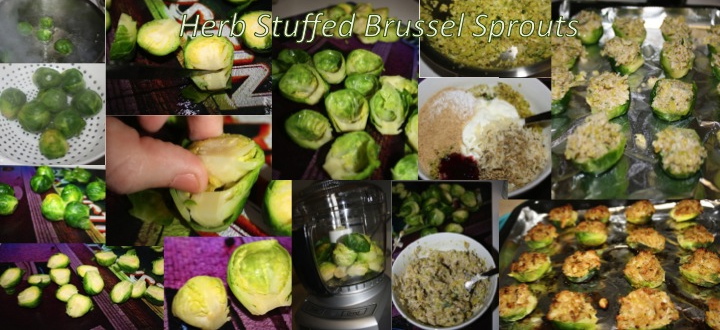
Stuffed Brussel Sprouts

While the chicken is baking, you can make the brussel sprouts side dish.  Here’s what you’ll need:

  • 8ish organic brussel sprouts (mine were small to medium sized and made plenty for two people)
  • 3 tablespoons organic greek yogurt
  • 1-2 tablespoon raspberry-chipotle sauce (optional, but I love the stuff)
  • 3 tablespoons freshly grated Parmesan cheese
  • 1 clove garlic, peeled
  • 1 teaspoon chopped basil
  • 1 teaspoon chopped thyme
  • 1 teaspoon chopped oregano
  • 1 teaspoon each of salt and pepper
  • 1/4 cup bread crumbs (I put my sprouted bread in a food processor for the fresh, cheap kind)

First, boil 4 cups of water and put your washed brussel sprouts in the pot for 1-2 minutes to blanch them.  Basically, when they turn bright green, take them out and put them in a colander to drain them and let cool.  Blanching them makes them easy to cut and core. Once cool, chop the ends off and cut in half. Next, take a paring knife and cut the stem part just enough to where you can pull out the inner part of the sprout, just leaving an outer shell for stuffing. (There’s lots of videos online showing how to do this if you need a better visual.)  After separating the inner sprouts from outer leaves, put the inner parts in a food processor with the garlic and chop until fine.  Then, saute your inner sprouts and garlic in some olive oil until tender.  Once cooked, mix in a bowl with the rest of the ingredients and stir to mix everything together. Lastly, fill the sprout shells with the mixture, overfilling each a little bit and arrange on a baking sheet lined with foil.  Put in the oven with your chicken (375 degrees) for 10-15 minutes, until the tops and outer shells are browned.

Happy Cooking!

– Christine

My Inspiration – Deep Nutrition

A few months ago, some dear friends loaned me a book that changed my perspective on health forever – Deep Nutrition: Why Your Genes Need Traditional Food, written by Dr. Catherine Shanahan and her husband, Chef Luke.  I was first inspired by Dr. Cate’s own personal story: after visiting many doctors and trying to use what she had learned in medical school to solve her unexplained health issues, she finally found healing by studying, at Luke’s suggestion, nutrition. It’s a miraculous story, and I don’t want to spoil it in hopes that someday you’ll read it too, but it’s what finally gave me hope for finding my own healing.

Since Dr. Cate is an expert in genetics, she uses this book to connect the dots between nutrition and it’s effect on our genes.  I can be quite the critic, so although I struggled at times through this science-heavy book, I appreciated the fact that she explains the biological reasons behind every claim she makes.  Essentially, our genes have been shaped by what our ancestors ate, and continue to be influenced by every bite we take.  You don’t have to go back as far as Paleolithic times, diets for which we have very little evidence, to find out what makes our bodies survive and thrive; you only need to look at the traditional cuisine of authentic cultures that exist worldwide today and have endured the test of time. Dr. Cate’s theory is the “Four Pillars of Authentic Cuisine:”

  • Meat cooked on the bone
  • Organs and offals
  • Fresh (raw) plant and animal products
  • Fermented and sprouted foods

Thankfully, our genes bounce back very well, so it’s never too late to make a change.  I’ve only been following this nutritional method (though I’ll admit, not as closely as I should, hence my resolution) for a few months and I’ve already seen a dramatic change in how I feel.  More than that, I’m making a difference in the lives of my future children by passing down my genetic wealth and giving them a real chance to be happy and healthy.

Deep Nutrition is full of so much great information that one post, or even a few, would not do it justice.  I’ll spend the next few weeks delving into these four pillars and the topics discussed in the chapters of this book, as well as share some recipes that I’ve created to follow these ideas in a practical world.

Which of the four pillars are most surprising to you?