A Health Challenge: My Goals

Auld Lang SyneWe are almost halfway through January and I wanted to check in… how are you doing with your New Year’s resolutions?   I’ll be honest, I’ve failed already.  But, I’m not giving up quite yet!  

I recently organized a health challenge for my office and have also decided to participate.  The challenge runs 12 weeks and started yesterday.  The competition is based off of body fat percentage loss since that is a good indicator of both fitness and health and more accurate than BMI.  Plus, you can see your percentage loss, weight loss and inches loss at the end, which is so encouraging.  Y’all, my current body fat percentage puts me in the “overweight” range… I have got to get back in that healthy range! I’ve known for awhile what I should be eating and doing to get my body healthy, I just haven’t had the self control to do it. As I sat down last night to think through my goals and make a plan, I knew that many of you also have some health resolutions this year and might want to see what I’m doing.  If you haven’t made a resolution yet – it’s not too late!  Here are the five things I am focusing on for this challenge, why they are important and some simple action steps to follow if you are interested in adapting them yourself:

  1. Increase Nutrients – With all the packaged and processed foods in our restaurants and grocery stores, we are no longer getting the nutrients our bodies are starved for.  We have essentially become malnourished as a culture.  The blog 100 Days of Real Food has some great meal plans and recipes to avoid processed food.  I will be focusing on eating real food with real health value to my body.  I will aim for 5+ servings of vegetables per day and a high protein, high fat diet to keep me full and give my body energy instead of relying on cheap carbs to do so.  Basically, I’ll just be eating lots of freshorganic produce and protein.
  2. Eat Clean – It is important to eliminate the toxins in our environment and foods that are causing harm to our bodies.  In order for the nutrients we eat to work effectively to help our body, we need to make sure we are not poisoning it at the same time.  I always look for these on food labels when grocery shopping or on a restaurant menu:
    Hormone-Free
    Antibiotic-Free
    Preservative-Free
    Pesticide-Free (Produce)
    Cage-Free (Eggs)
    Free-Range (Chicken)
    Grass-Fed (Beef)
    Wild-Caught (Fish)
    Non-GMO
    Nitrate-Free
  3. Eliminate Inflammatory Foods – While losing weight/inches/fat would be great, my main goal is health.  I want to get my hormones balanced, be pain-free and increase my immune function.  My adrenal levels are currently way high, which is inhibiting all of those things and causing me to gain weight.  Eek! The only way to fix it is to change my diet: I will be avoiding grains & cheap carbs, soy (as always!), sugar (except for a couple of special occasions & some dark chocolate here and there) and vegetable oil (I use coconut oil instead… and no, it doesn’t taste like coconut).
  4. Drink More Water – A couple of months ago, I read the book Your Body’s Many Cries for Water and learned so much about how dehydrated I am (I plan to write a review about the book soon!).  Drinking lots of water has tons of benefits, including losing weight & detoxifying the body.  Per the book’s recommendation, my goal will be to drink at least 64 oz of water per day, plus an extra 16 oz for any coffee or tea I drink since those beverages work to dehydrate us.  Also, less alcohol… red wine is healthy, right?
  5. Get Moving – I’ve said it before and I’ll say it again: I hate exercising.  I can commit to eating well all day, but commitments to exercise always fail.  Recently, I watched an interesting documentary about exercise and I really want to put the routine into practice.  It will only take 3 minutes a week… surely I can.  I’m going skiing soon and my trip to Europe this Spring will entail lots of walking, so I need to be in shape. I woke up this morning and worked out for the first time in years, so I’m off to a great start. Please, ask me next time you see me and hold me accountable!

Writing those out makes it seem a little less daunting than it did yesterday.  Instead of focusing on what I can’t have, I’m going to focus on all the yummy foods that I can eat…. here’s to bacon, avocados, raw cheese, BBQ, sushi, colorful salads, nuts, fresh juice, sweet potato fries, fried okra, dark chocolate, and (in case you forgot) bacon.  Cheers!  *Water glasses clink*

Who else wants to join me?  What are your goals?
Soy it ain’t so…

No more soy!

Thanks to the marketing efforts of the soy industry in the U.S. (we are the top producer of soy, contributing around 35% of the world supply), we’ve been deceived into thinking that soy is a phenomenal health food. It’s supposed to be heart-healthy and keep you young. Vegetarians rely on it as a protein source. It’s a widely available alternative for those with lactose intolerance. And the Japanese, whose diet is considered one of the healthiest in the world, have eaten it for years. Unfortunately, the truth is that it’s cheap, easy to process, and therefore has great margins for making money, hence the pervasive marketing. Even worse, it’s toxic to our bodies when not prepared or grown appropriately. Bad news is that the toxic kind is how it’s currently produced and consumed by all of us today.

Soybeans contain two chemicals, goitrogens and phytoestrogens, that affect your thyroid and sex hormones. Traditionally, the Japanese would soak and ferment the soybeans before using them, which neutralizes these harmful chemicals and creates tasty and healthful miso, tofu, etc. But now, in commercially made soy products (even in many of those organically grown), the fermentation process is skipped because it’s cheaper & quicker to do so; instead it is hydrolyzed, a process that does not remove the toxins. So the soy sauce, soy milk, infant formulas, soy protein bars, tofu and most processed products you buy in stores and eat at restaurants are passing those chemicals straight to your body. These chemicals cause thyroid (regulates growth, metabolism and energy levels) issues, like hyper/hypothyroidism and thyroid & pancreatic cancer, as well as reproductive organ problems for both men and women. Soy is also one of the most common allergens, especially among infants and toddlers.

In addition to the fact that already-present chemicals are not removed, the toxic solvent hexane (a chemical by-product of gasoline refining) is used to process soy proteins. Hexane can cause cancer, birth defects, reproductive issues, and adverse effects on the environment.

Even worse, 90% of soybeans are genetically modified, a serious health issue I discussed at length here. The GMO quality of these beans only adds to the health effects, now being linked to sterility and infant mortality.

Seeing a trend here? I don’t know about you, but when I learned about all this, I was immediately motivated to remove soy from my diet. Personally, I saw amazing changes in some hormonal issues I was suffering from within just a few weeks (starting with getting rid of my daily soy-protein bars at breakfast). Here’s a few suggestions to get you started:

  • When shopping, go for fresh foods instead of processed items. If you do buy packaged (even organic), look at the ingredients label and avoid these substances: soy, soy protein (isolate/hydrolyzed), soy lecithin, hydrolyzed plant/vegetable protein, monoglycerides, MSG, and soybean oil
  • If you are lactose-intolerant or vegetarian, go for cashew, almond or, my favorite, coconut milk. I find that unsweetened, full fat coconut milk tastes the most similar and works in recipes as an easy substitute – plus it makes delicious and healthy whipped cream!
  • Start your babies off right – most infant formulas contain GM soy. Breast-feeding is best, but if you must use formula, you will have to make your own, find a local goat farm for milk, or participate in a milk sharing program. Unfortunately, there are no soy-free options available for sale in the United States, but you can import from Europe (Holle brand in Germany).
  • Attention meat eaters: many fast food restaurants put soy flour and soy protein in their meat and buns, among other things…
  • Lastly, you can still enjoy those tasty Asian dishes with traditionally fermented soy sauce instead. I have found it at every grocery store I’ve visited and I actually like the taste better. Here’s one brand to try.  Or, you can use coconut aminos, which has a very similar taste and is completely soy-free.
I’d love to know… Is this the first you’ve heard about the dangers of soy? Will you try removing it from your diet?

A Whole Chicken for Your Nest Egg (Part 1)

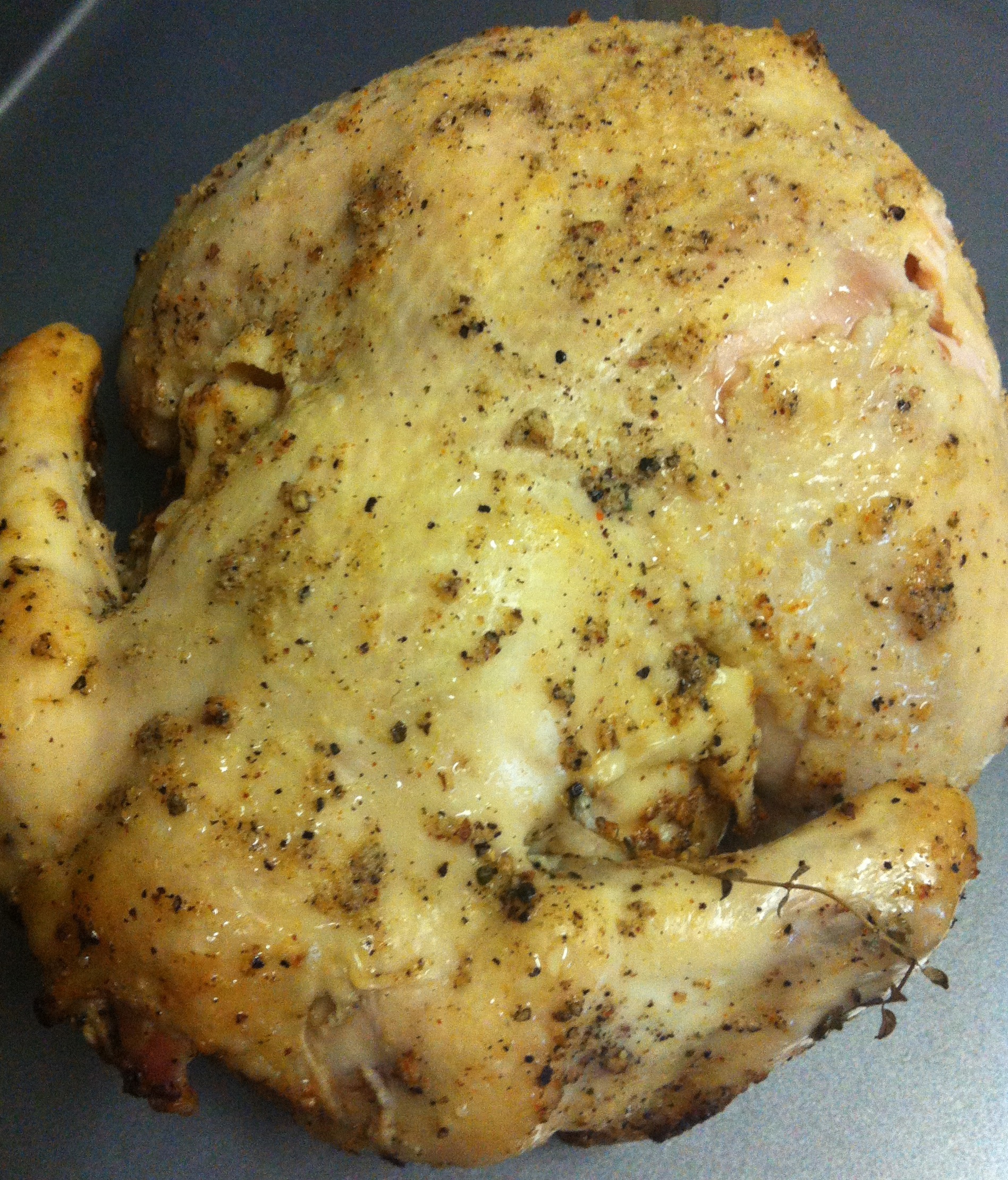
Whole Cooked Chicken

Looking for a way to save a little money each week?  Did you know that you can buy a whole chicken at the grocery store for almost half the price per pound that you can buy boneless, skinless chicken breasts?  Since we eat chicken more than any other meat in our home, this is a great deal for our budget.  Plus, you can get WAY more nutrients & meals out of a whole chicken with the skin and bones still attached.  More for less?  I don’t see a downside here…

As I’ve mentioned before, slow-cooking meat on the bone is a tradition for a reason. You need only taste some delicious BBQ ribs that have been on the smoker for 10+ hours or the juicy Thanksgiving turkey that Grandma has been basting all day.  So, why is it that meat tastes better when cooked this way?  Nutrients take time and moisture to be released.  When you overcook meat, it becomes tough because the fat, protein and sugar within the meat get fused during the heating process and destroy the nutrients, causing reactions between them that form carcinogens. You can avoid this by making sure your meat stays moisturized during cooking (basting, slow cooking, stews, pressure cooking).  The water molecules tenderize the tough proteins and keep them from fusing together. They also work at the connective tissue in the cartilage, skin, bone and ligaments to release molecules that help our joints and minerals like calcium, potassium, iron, etc.  The great taste comes from the itty bitty peptides that are formed as water molecules chop the proteins small enough to fit our taste buds.  Need one more reason to keep the skin on? The fat sits right underneath the skin in birds – fat gives us energy, helps our cells rebuild and allows us to absorb fat-soluble vitamins like A, D, E and K. This natural, healthy fat is different than sugar in that it doesn’t cause an insulin release (hello weight gain). However, it’s important that you buy organic meat; because pesticides on the plants animals eat accumulate in their fat, you need to buy organic to avoid these chemicals (and much more).

Each week, I buy a whole, organic chicken (remove and save giblets).  I usually season with salt and pepper and some fresh herbs, but you can find recipes online for adding other ingredients for different flavors.

Seasoned raw chicken in crockpot

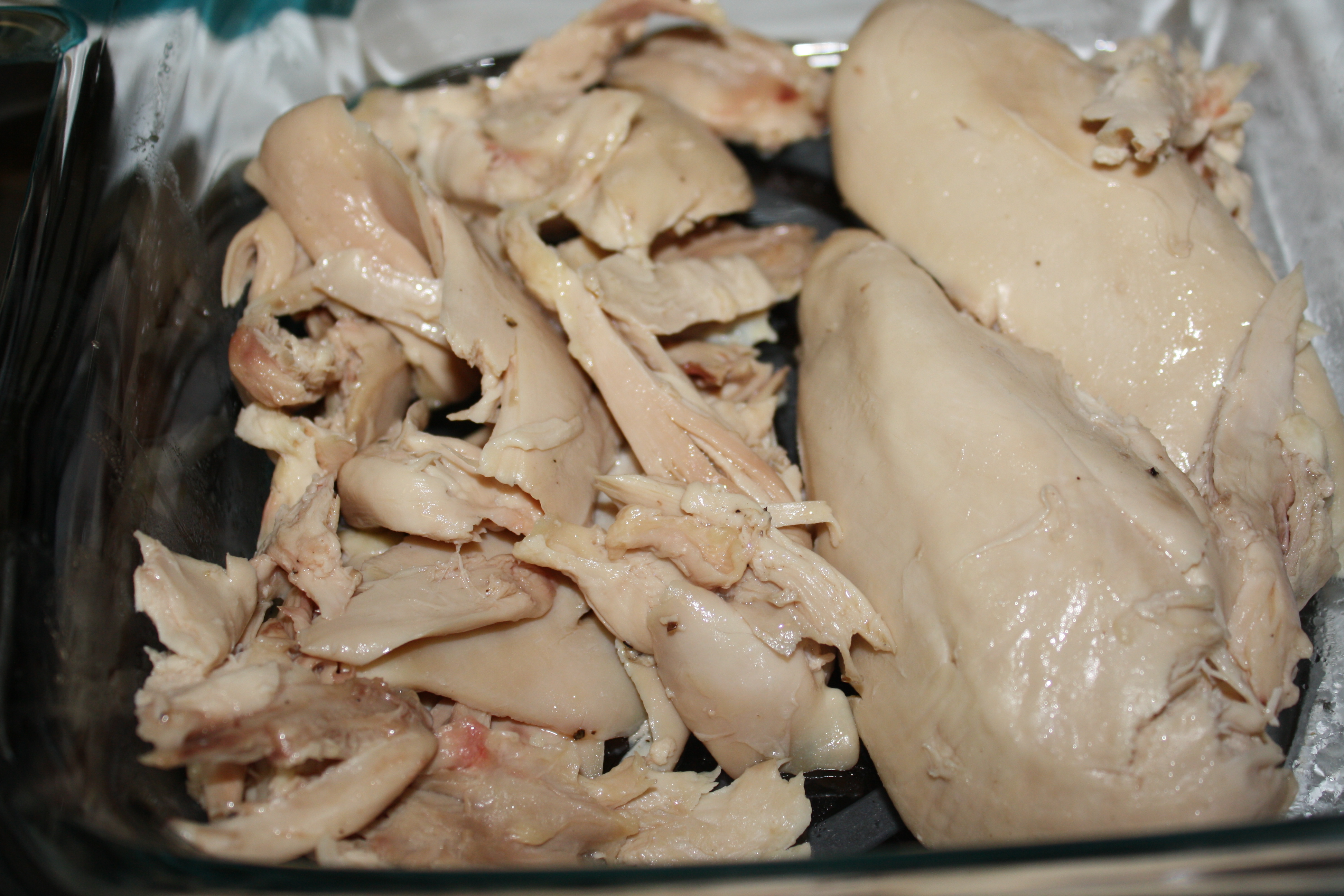
I put it in my crockpot on low for around 4 hours (it depends on your crockpot temp so basically until meat thermometer reaches 165 degrees).  After letting it cool a bit, I take the meat off the bones. You can find YouTube videos showing you how if you’ve never done it before – I promise it’s easy and not as gross as it seems. And just look at how much meat I have for the week:

Cooked Chicken

Now, I always have this ready to go for quick meals – add some fresh veggies, put it in a salad or add to a soup. The actual hands-on time is only 5 minutes to start and then 10 to take the meat off the bones. I save the bones and put them right back in the crockpot.  In part two, I’ll explain how the bones give us even more nutrients and help create a staple of culinary technique.

Note: If you typically don’t like dark meat (like my hubby), try using those pieces in soups or other dishes, instead of by themselves.  I’ll admit I always hated dark meat until I started using organic meat – it doesn’t seem to have the same type of fatty texture that’s always disgusted me in the past.  Try it and see what you think!

Source: I simplified the scientific process of hydrolytic cleavage, or hydrolysis.  You can learn more about it online or from Deep Nutrition.

My Inspiration – Deep Nutrition

A few months ago, some dear friends loaned me a book that changed my perspective on health forever – Deep Nutrition: Why Your Genes Need Traditional Food, written by Dr. Catherine Shanahan and her husband, Chef Luke.  I was first inspired by Dr. Cate’s own personal story: after visiting many doctors and trying to use what she had learned in medical school to solve her unexplained health issues, she finally found healing by studying, at Luke’s suggestion, nutrition. It’s a miraculous story, and I don’t want to spoil it in hopes that someday you’ll read it too, but it’s what finally gave me hope for finding my own healing.

Since Dr. Cate is an expert in genetics, she uses this book to connect the dots between nutrition and it’s effect on our genes.  I can be quite the critic, so although I struggled at times through this science-heavy book, I appreciated the fact that she explains the biological reasons behind every claim she makes.  Essentially, our genes have been shaped by what our ancestors ate, and continue to be influenced by every bite we take.  You don’t have to go back as far as Paleolithic times, diets for which we have very little evidence, to find out what makes our bodies survive and thrive; you only need to look at the traditional cuisine of authentic cultures that exist worldwide today and have endured the test of time. Dr. Cate’s theory is the “Four Pillars of Authentic Cuisine:”

  • Meat cooked on the bone
  • Organs and offals
  • Fresh (raw) plant and animal products
  • Fermented and sprouted foods

Thankfully, our genes bounce back very well, so it’s never too late to make a change.  I’ve only been following this nutritional method (though I’ll admit, not as closely as I should, hence my resolution) for a few months and I’ve already seen a dramatic change in how I feel.  More than that, I’m making a difference in the lives of my future children by passing down my genetic wealth and giving them a real chance to be happy and healthy.

Deep Nutrition is full of so much great information that one post, or even a few, would not do it justice.  I’ll spend the next few weeks delving into these four pillars and the topics discussed in the chapters of this book, as well as share some recipes that I’ve created to follow these ideas in a practical world.

Which of the four pillars are most surprising to you?