7 Ways to Control Your Allergies Naturally

There’s nothing better than waking up, checking the forecast & seeing this:

Weather Forecast

But then, I check the other forecast.  The one that tells me if I can actually go outside and enjoy the beautiful weather…

Allergy Forecase

This time of year is awful for my allergies.  The cedar gets me the worst… can anyone else relate?

I used to reach for allergy medicine or anti-histamines to get me through, but after many years rotating through, they eventually stopped working. And I don’t know about you, but anti-histamines make me feel sleepy and sluggish so it’s hard to get up and go to work.  Plus, the purpose of those is to dry you up, so they are dehydrating.  In search for something that would help provide some relief, I’ve discovered a few ways that have really helped me control my allergies:

Allergy Relief

1. Use a nasal rinse.  This will clear your sinuses of allergens & bacteria.  Plus, it moisturizes your system, thinning the mucous to keep it moving through the system and reducing post-nasal drip. The saline mixture added to warm, distilled water works wonders for clearing my nasal passages and keeping me from getting too stuffy. I use this kind – you can find it at nearly any drugstore.
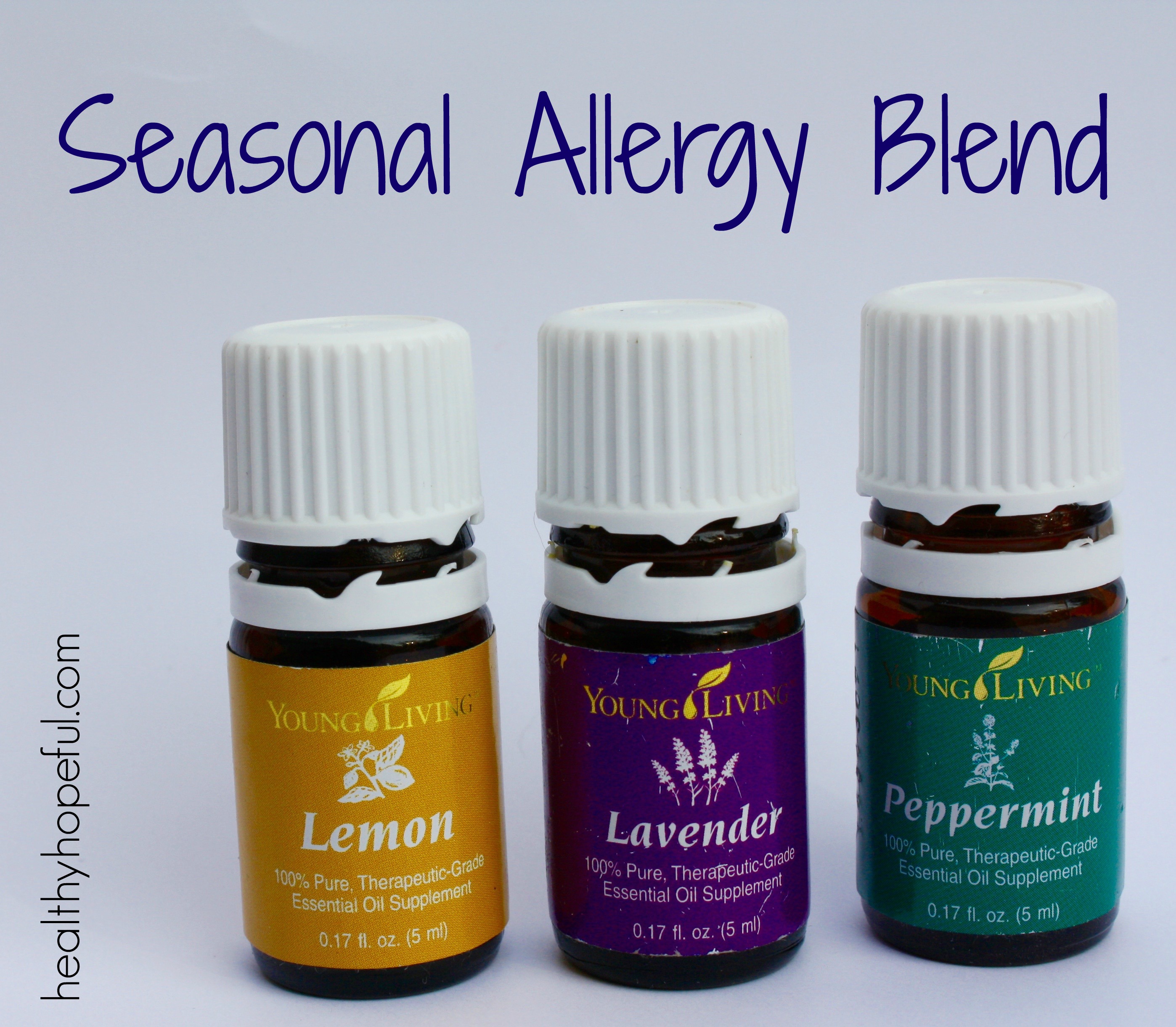
EO Allergy Blend2. Essential oils have worked miracles for me with my allergies.  In particular, I use a combination of Lemon, Lavender & Peppermint (aka the LLP bomb). I put them in my diffuser, put 3 drops of each in a capsule to swallow or put them in a spoonful of local, raw honey.  There are also a few other oils that can be super helpful with symptoms of congestion – RC & Breathe Again – or sinus headache – Copaiba.  Read more about how essential oils can improve your health here.

3.  Nothing relieves my itchy eyes better than Can-C Carnosine Eye Drops.  It is the best eye drop out there; even though it’s not specifically for allergies, it is a great moisturizer and completely safe. On a side note, I’ve read stories that it has even helped people improve their vision or cataracts.

4. I recently discovered a homeopathic tincture called Allergena.  They have blends for specific regions (Texas is Zone 5), or for allergies to pets, mold, dust, and several others. You put a few drops under your tongue every 10 minutes as long as you feel symptomatic until you don’t.  It works super fast to provide relief for sneezing, runny nose & itchy eyes.

5. A couple of times a day, I take Natural D-Hist. My doctor recommended it originally for my stress hives last year, but it also helps with seasonal allergies.  The blend of healthy ingredients helps relieve irritation from increased histamine response.  Although it doesn’t provide fast relief, I have seen a lot of benefit by taking it consistently every day.

6. While it’s not realistic to always stay inside, it helps to keep your indoors an allergy-free environment to give your system some reprieve.  Take a shower each night and wash your hair to get the pollen out. Put your clothes in a hamper when you get home for the day. Leave your shoes at the door. Wash your sheets and vacuum often. Close your doors and windows. Run an air purifier to remove those particles from the air – this is the one I use.

7. Eating a healthy diet is a crucial way to reduce inflammation & mucous production.  Organic fruits and vegetables will help provide vitamins and antioxidants.  Avoiding dairy and sugar will help lower your body’s inflammatory response and keep your immune system functioning properly.  Staying hydrated is also important; water helps control levels of histamines in the body.

Do you have any other ways that help you control your allergies naturally?  Thinking about trying any of these out? I would love to hear feedback on how these work for you!
Healthy Hygiene Part 2: Deodorant

In honor of Breast Cancer Awareness Month, I’d like to share a little something about a simple way that you can help decrease your risk of developing breast cancer: change your deodorant.

There are two very common ingredients in deodorant that continue to be implicated as one of the possible causes of breast cancer – Aluminum & Parabens. Aluminum is used as an antiperspirant; it blocks pores and therefore prevents sweat. Parabens (look for: methylparaben, propylparaben, butylparaben or benzylparaben) are found in most beauty products and are used to prevent bacteria growth, which helps both the shelf life of a product and preventing odors from developing as you use the product.  The issue with both of these compounds is that they are proven to mimic estrogen in the body and cause hormone disruption.  Estrogen promotes the growth of breast tissue, but when disrupted, it can lead to an abnormal & excessive growth of cancerous breast tissue.

Your underarms are a very sensitive area, with thin skin covering many blood vessels and a large cluster of lymph nodes.  The materials that you spray or roll on that location are absorbed easily by the skin.  If you shave under your arms and then roll on deodorant, you have even increased your exposure and allowed these chemicals to go straight into your blood stream.  Aluminum is a toxic metal to our bodies and if you take a look at the back of your product, you’ll find many other questionable, hard-to-pronounce ingredients on there as well. Any toxicity can limit the function of your lymphatic system, which contributes to your overall immune function.  I don’t know about you, but this is simply not a health risk I am willing to take for beauty’s sake.  Fortunately, there are safe, alternative options.  Here’s a few I recommend checking out:

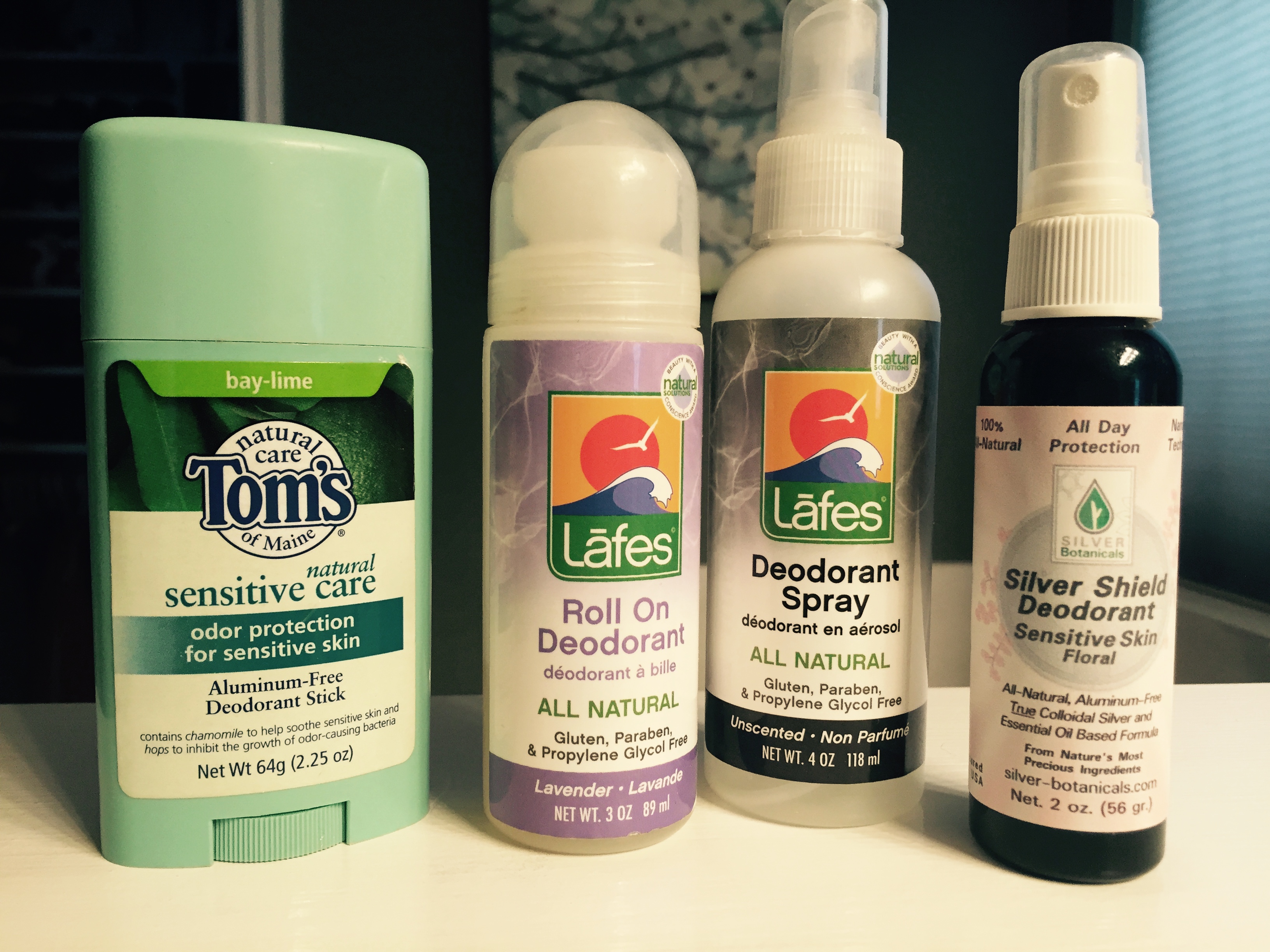
Silver Botanicals – Silver Shield Deodorant

I found this awesome company at my local farmer’s market one Saturday and I am thrilled to be sharing them with y’all.  They use a blend of essential oils and colloidal silver.  Essential oils have a long list of medicinal benefits and are naturally deodorizing, anti-bacterial and have a long-lasting aroma.  Colloidal silver also has many healing properties as an anti-microbial preventing the growth of bacteria. I take it every day as an immune supplement and double up when I’m sick, so it only makes sense to put it under my arms also.  I have found this to be the best natural deodorant out there; it keeps me smelling good all day and the more I use it, the less I sweat – it’s getting my body back in balance.  One caution: it will sting a lot if you try to apply right after shaving… wait an hour or so.

Coming in at only $7.50 for a 2 oz spray bottle (it’s lasted me two months) with the option to buy discounted refills in the future, it’s a great deal. Silver Botanicals also has a great line of other hygiene & household products, my favorite being the Oral Disinfectant mouthwash.  If you don’t live in Austin, you can buy online.

Sam’s Natural Deodorant

This was recommended to me by my friends Emily & Ben – they both said that it keeps them smelling fresh the longest of any option they’ve tried.  Their list of ingredients contains several essential oils, coconut oil (which I love!), and does not contain harsh chemicals. I am excited to try it soon and see if it works for my hubby!

Buy the handmade 3 oz stick online for only $8.95 and read more about the cool company living out their American Dream.

Lafes Organic Mineral Salt Deodorant

I wrote about this product in my first installment of Health Hygiene Routines and continue to have great success with it.  I love that the list of ingredients is simple: mineral salts, essential oils and aloe vera.  I still use this regularly because it’s the most effective at preventing sweat.  How? Because of it’s use of natural mineral salts.  These mineral salts are potassium alum, which I recently  learned are technically aluminum, but with molecules too large to fit through your skin’s pores.  Essentially, it creates an outer layer that helps block perspiration instead of  actually going in your pores like aluminum.  While there are not studies yet on if on if our bodies absorb any of the toxic metal from these crystal salts, if perspiration is a problem for you (or you are looking for an option for Summer or exercise), I think it’s worth giving it a go; it still doesn’t contain parabens or other harmful chemicals.

I use both the unscented spray and the roll on lavender version.  You can find a 4 oz bottle for only $4.50 at Natural Grocers or online.

Tom’s of Maine Natural Sensitive Care Deodorant

One last option, especially for those of you with easily irritated skin or bad razor burn. I find that the more often I switch on and off of different deodorants, they seem to stay more effective (shampoo is the same way for me… anyone else?).  This deodorant has such a cooling effect that it is my go-to after I shave.  It doesn’t last very long for me, so I have to reapply once more a day, but I love the smell and it feels so smooth. Again, this option is paraben & aluminum free and the list of ingredients is simple.  It uses chamomile to soothe and hops to prevent odor-causing bacteria.

You should be able to find the 2.25 oz gel stick at your regular grocery store for $5.00 – I’ve seen it at Whole Foods and H-E-B.

Deodorant

The great thing about these natural options are that they have plenty of other benefits as well…

  1. For those of you with sensitive skin (like my friend Emily who gets blisters when she uses regular deodorant), you should see the irritation you experience drastically decrease with options that don’t contain lots of chemicals.
  2. Wives who do their husband’s laundry, rejoice: You’ll no longer have to deal with trying to bleach those gross yellow stains on all of their white shirts!
  3. You’ll be supporting small businesses & companies who truly care about the health of their customers.

Is this a change you would make? Which one are you interested to try?

Sources: Dr. Mercola, Livestrong, Silver Botanicals

Emphasis on Hopeful

Apologies for the lack of new posts recently – life’s been a bit crazy lately, with little time left for blogging! Although I have a couple of posts I really want to write & share soon, I thought it was about time for an update on my health…

A few months ago, in reaction to an extremely stressful time at work, I got an ear infection.  Let me tell you, friends, ear infections are the worst.  The only pain was terrible and nothing seemed to help.  I tried home remedies – living clay, essential oils and loading up on all kinds of vitamins – without any luck.  I visited the doctor twice to no avail and, in my desperation, I opted to take antibiotics.  Unfortunately, as expected, they made me super sick, gave me a rash & didn’t help at all.  Finally, a visit to the ENT to insert a sponge helped get steroids directly into my ear and multiple visits to the chiropractor drained the fluid eventually.

Our trip to Europe provided some reprieve from the stress this summer; the break gave me a renewed mind and optimistic perspective.  But as the hours at work picked back up, all of my post-vacation resolutions – talking the dog for nightly walks, spending more time with friends and family, cooking meals, even shopping for groceries – got neglected quickly as there just weren’t enough hours in the day.  As my work-life balance suffered, the stress creeped back in and, therefore, back into having it’s effect on my immune system.

RelaxOne day in early August, I woke up with hives all over the back of my legs.  I thought it was odd and attempted to find what the cause could be; but, nothing in my routine, diet or hygiene/beauty products had changed.  Figuring the hives would go away soon and it had to be a fluke, I just dealt with the itching.  But they lasted, spreading and progressively getting worse and worse.  After a week, I made an appointment with my naturopath doctor.  Asking questions about every aspect of my life, sleeping habits and diet, she got the full picture of my health.  She suggested that while I could be experiencing an allergic reaction, she was pretty positive that stress was the cause.  Hoping to learn more about what was going on with my body, she prescribed a blood test and hormone panel. In the meantime, I would stay away from gluten and really focus on my nutrition to lessen the inflammatory response my body was having.  After four long weeks, my hives finally subsided; the stress was still there, but I think that a better focus on my diet and a supplement I got from my chiropractor finally helped my body stop overreacting.

The CDC states that emotional stress causes 80-85% of all illness. It makes sense – stress suppresses our immune function, so, long-term it gets even worse.  This month, I’ve been sick twice – a bad cold and then food poisoning for the third time this year… ugh!  But I returned to my doctor last week and the results were in: stress is the culprit.  Even after all my time at the pool this summer and daily Vitamin D supplements, I was still deficient and need to increase my intake.  I’m anemic, so will be taking a liquid iron supplement to give me more energy.  And although I drink lots of water and even add Himalyan pink sea salt, my electrolyte levels were still low – I foresee lots of coconut water (NOT sugary gatorade) in my future!

Most importantly, my DHEA levels were extremely low.  Although known for overuse by athletes, the presence of DHEA in our body is essential.  Most people in their twenties are producing more DHEA this decade of their lives than any other.  DHEA is a steroid hormone secreted by your adrenal glands; during times of stress, your adrenals are pumping so much cortisol that they produce very little DHEA. But that has massive effects as DHEA is the precursor to estrogen, progesterone & testosterone.  As a result, my hormones are totally out of whack.  So, instead of “doping” up on unnatural DHEA, I’ll be taking a custom supplement designed by my doctor to provide the building blocks to hormone development, bringing the levels back up. I’ll also be on a high-protein diet of 60-80 grams per day to balance my blood sugar – prolonged high-cortisol response causes problems there too.  So, if anyone has some good ideas for high-protein snacks (especially low-budget options), please share!

While the news was not good, I am thankfully at a point where I can step in to make these changes now and get my body back in balance before things get more serious.  It will take many months to recover, but I am committed to focus on my health – this body is the only one I get.  In the meantime, I would appreciate any & all stress-management recommendations!  I am rejecting the identity of illness that I’ve had my whole life; I am so hopeful that healing is near and I will choose joy & faith.

Meditating on this verse lately: “Surely he took up our infirmities and carried our sorrows, yet we considered him stricken by God, smitten by Him, and afflicted. But he was pierced for our transgressions, he was crushed for our iniquities; the punishment that brought us peace was upon him, and by his wounds we are healed.” – Isaiah 53:4-5

In the Summertime when the weather is hot…

I love Summer.  The sunshine is life-giving to me!   I can’t imagine anything better than spending time at the pool and lake with the warm sun on my skin.  Plus, it’s mostly allergen-free, so unlike most of the year, I can spend lots of time outside without regretting it later.  Anyone else share this passion with me??

Unfortunately for a lot of people, the summertime has a bad rap.  The beautiful sunshine has been villainized; we are advised to minimize our sun exposure and when we must be outside, cover every inch of ourselves with sunscreen every hour so we don’t get the big, bad cancer.  Funny how effective the “c” word is into scaring us into submission.

Coincidentally, our nation is currently experiencing epidemic levels of vitamin D deficiency.  Vitamin D is a valuable nutrient that comes from the sun and helps our immune system protect our bodies from a multitude of diseases, including cancer.  Actually, some research studies have proven that sun exposure can decrease our chances of getting cancer.  Add to that the fact that there is no proof that sunscreen protects against cancer and that sunscreen itself contains dangerous chemicals and carcinogens, the case against the sun is quickly diminishing.

Okay, now of course, the sun can be dangerous; it is a burning ball of fire, after all. You can’t simply sit outside for hours in direct sunlight and not expect to be hating yourself the next day.  Sunburns do cause cell death and can damage your skin.  It’s important to develop a healthy relationship with the sun…

After a winter indoors, your skin will need to be acclimated to the sun.  The best way to do it is spend 15-30 minutes at a time out in the sun (without sunscreen), getting exposure little bits at a time.  Your skin will respond as it is supposed to, the melanin will become tanned and protect you more and more from the sun naturally.  People with fair skin get Vitamin D faster and reach the maximum level of exposure sooner, so then it’s time to find some shade.  But most people can work up to being able to spend hours in the sun without harm.

If you are going to be out in the sun for longer than your skin is ready for, or your children need protection, consider using natural sunscreen options instead of those loaded with chemicals.  Personally, I use straight up coconut oil whenever I am in the sun for longer than half an hour.  It has minimum SPF so it still allows me to get Vitamin D and my skin tans easier when I use it so that I can build up my natural tolerance to the sun faster.

Lastly, a healthy diet is the best way to avoid a sunburn.  A diet high in antioxidants will protect your body from sunshine’s free radicals that cause cell damage.   So feel free to snack away at those sun-ripened berries and dark chocolate!  Avoiding foods that cause inflammation are another way to protect yourself – grains and Omega-6 vegetable oils being the main offender.  People often blame the sun for their wrinkles, collagen breakdown/premature aging and sun spots, but it’s actually an inflammatory diet that causes these issues.  Eat a diet high in healthy Omega-3 fats (found in animal fats, fish, coconut oil and organic raw dairy), the building blocks of your skin.

Now, get out there and enjoy the summer sunshine without fear!

Read more from my sources here:

Scientists Blow the Lid Off Cancer & Sunscreen Myth

4 Ways You Are Screwing Up Your Sun Exposure

Avoid Sunburn, Tan Better

Benefits of Sunbathing to Pregnancy and Nursing

“You’re Not Sick; You’re Thirsty”

Is it possible that the majority of illness originate from something as simple as dehydration?  Could we be treating ourselves with medicine when we should just be drinking more water?  I recently read Your Body’s Many Cries for Water by F. Batmanghelidj, MD, which explores this possibility.

Water

Our body is made up of 75% water, and in particular, our brain tissue is 85% water. Adequate hydration is essential to our bodies and brains functioning properly to stay healthy.  But many of us are suffering from chronic dehydration because we live in a society where coffee, tea, alcohol and manufactured beverages like soda have become acceptable thirst-quenchers.  While many of these contain water, they also contain dehydrating agents that only make our body’s more thirsty.  And, sodas, in particular, are addictive (both the caffeine and sugar), taking away our natural thirst for water, even when it’s plentiful and available.

We tend to think that we are “thirsty” when our mouths become dry and we crave a drink.  But this is actually the last outward sign of dehydration – if you are feeling this, your body is screaming for water.  And as you age, your body begins to ignore “dry mouth” more and more, making dehydration easier. Our vital organs receive the water, nutrients and hormones they need to work only by enough water existing in the body to deliver those elements, so it’s obviously essential to our basic functioning.  Just in case you need a few more reasons to drink more water, here are some that really stood out to me:

  • Morning sickness during pregnancy is the main indicator of a baby and mother’s dehydration.  Water is essential to cell expansion during a baby’s first stage of life.
  • Chronic pain is a huge indicator of thirst.  For a while, painkillers may work for pain monitored by the central nervous system, but eventually the brain will become so dehydrated that it will register all pain until it gets enough water.  And, until it does, the pain will increase and the body will limit the mobility of those areas in order to “prevent the production of additional toxic waste” that water, if available, would wash out. If you are experiencing consistent back pain, leg pain or headaches, take note.
  • Dyspeptic (gastritis, heartburn, constipation) pain is an emergency thirst signal.  “Digestion of solid foods depends on the presence of copious amounts of water” and “water provides the only natural protection against the acid in the stomach.”  Antacids contain a lot of aluminum (so does your deodorant, by the way), which combined with brain cell dehydration are proven causes of Alzheimer’s disease. Stop popping those antacids and drink a couple glasses of water instead.
  • “Fully 75 percent of the weight of the upper part of the body is supported by the water volume that is stored in the disc core.”  While proper posture is helpful, adequate water is essential if you are experiencing back pain.  Exercises that stretch the back and help “vacuum” water back into the disc space will help both neck and back pain.  I personally find that laying on the bed with my head off the edge for a minute or so helps a great deal.  Of course, my chiropractor adjustments help tremendously as well.
  • Dehydration affects the regulation of body temperature.  Many migraines and headaches are caused by “heat stress” because of dehydration that may occur due to lack of drinking water, drinking alcohol, or an allergic reaction that releases histamines (blocking hydration).
  • Dehydration leads to stress in the body and causes hormones to go into crisis mode.  As a result, dehydration contributes to chronic fatigue syndrome and depression.
  • Using caffeine to override your body’s available energy will lower levels of stored energy, meaning that your hormones will not be able to react appropriately later and the brain has less energy to work from, leading to less focus and attention span.  This dehydration effect is exacerbated when elderly people with memory problems or children with learning disorders drink anything other than water, especially soda.
  • Adequate water and salt intake are essential to maintaining blood volume that prevents hypertension.  The body will do all it can to retain water and sodium (helps balance water in and out of cells), yet the current “treatments” for hypertension prescribe diuretics.  Water is the best diuretic – if you are drinking enough water, your body will respond and eventually flush out the toxic edema fluid rather than the water your body desperately needs.
  • Cholesterol is essential to the function of our cells because it helps our cells retain water.  In the state of dehydration, you will develop high cholesterol as its working in overdrive to prevent cell dehydration.
  • “The sensation of thirst and hunger are generated simultaneously to indicate the brain’s needs.” We cannot tell the difference, and thus often overeat when our body’s are really just crying out for water.  Then, dehydration causes our brain to crave more energy, thus causing us to crave sugar.  So, we overeat, eat unhealthy foods and gain weight simply by being dehydrated.
  • Asthma and allergies are indicators that the body has resorted to an increase in production of the neurotransmitter histamine, the sensor regulator of water metabolism and its distribution in the body.”
  • In some cases of chronic dehydration, our brain begins to inhibit insulin so the pancreas can provide water for food digestion – a crucial function to provide energy to the body.  Ultimately, this can cause insulin-independent diabetes, and instead of drinking more water & eating a balanced diet to get the body to behave normally again, people take chemical override medications to force the body to produce more insulin.
  • Salt is crucial to ensuring we have an “ocean” of water outside our cells, but the table salt we eat in most foods is a chemical and not mineral-rich.  Remove sodium preservatives and table salt from your diet and replace with unrefined sea salt to keep your body’s hydration in balance.

The simple way to prevent the damage from chronic dehydration is to drink enough water.  Your body needs a minimum of 8 glasses of water per day, more, especially, if you are drinking alcohol or caffeine.  If your urine is not colorless, you are not hydrated enough.  Drink water slowly, throughout the day.  I typically drink a glass of water before and after each meal, and then at least one in-between each meal as a rule of thumb.  If I am feeling sick, my allergies are flaring or my back pain returns, I immediately drink lots of water, and only water, until the symptoms pass. I have truly noticed a difference.

Are you drinking enough water?  If any of the above dehydration-related illnesses stuck out to you personally, you must read this book. It has very detailed chapters on each of the effects of dehydration and testimonials for how water has healed people.  Go read it (or borrow from me!) – it’s fascinating!